
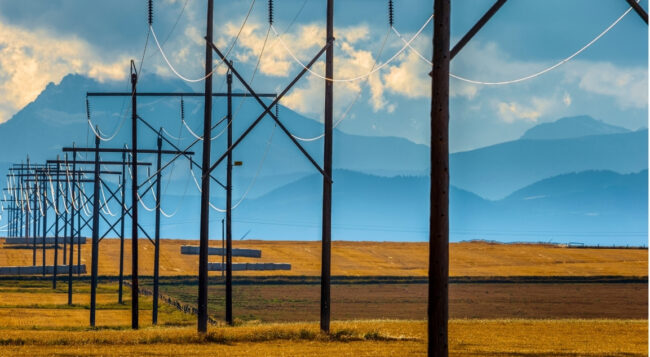
Strengthening interprovincial transmission between Alberta and its neighbouring provinces could enhance grid reliability, lower costs for consumers, and accelerate decarbonization, says a new Clean Prosperity report released today.
The recently signed federal-Alberta memorandum of understanding (MOU) commits both governments to building a strong, integrated interprovincial transmission grid, representing the strongest political alignment on interties in decades. But the MOU stops short of a clear implementation plan.
“Alberta and other provinces are all facing rising demand for electricity and serious concerns about affordability,” said Emma Dizon, report co-author and manager of Western Canada research and outreach for Clean Prosperity. “We have a window right now to articulate and implement a plan for strengthening interprovincial electricity transmission that would improve reliability and security while lowering costs for consumers.”
“We have a window right now to articulate and implement a plan for strengthening interprovincial electricity transmission that would improve reliability and security while lowering costs for consumers.”
Emma Dizon, report co-author and manager of Western Canada research and outreach, Clean Prosperity
To turn the MOU’s commitments into action, the report recommends that governments develop a clear implementation plan by April 1, 2026, built around three priorities:
- Collaboration: establish formal, transmission-specific working groups among Western provinces, system operators, utilities, and Indigenous communities, with a limited federal role in the event that provincial coordination breaks down.
- Quantifying the benefits: expand Alberta’s transmission planning framework by requiring the Alberta Electric System Operator to assess the full system-wide costs and benefits of new interprovincial interties, with public reporting.
- Funding mobilization: the federal government should accelerate projects by deploying concessional financing through the Canada Infrastructure Bank, and increasing the Clean Electricity Investment Tax Credit for intertie projects.
“Interprovincial transmission offers a rare opportunity to strengthen the electricity system in ways that benefit consumers, the economy, and the climate,” said Joel Krupa, report co-author, and senior advisor, energy and climate policy at Clean Prosperity. “With a concrete plan, clear roles, and dedicated funding, Alberta has the opportunity to strengthen its electricity system for decades to come.”
Photo credit: Don White from Getty Images Signature


